Showing posts with label music magazine. Show all posts

Thursday, 15 October 2015

Flat plan planning

A crucial part of the planning process for any printed publication (or indeed any publication at all) is the flat plan. Ensuring your work is as professional as possible, as well as grounded in design theory and drawing inspiration from your research, will mean you having to put a little effort into actually thinking about element placement on the page. Your magazines should ultimately aspire to look like a genuine product.


Success criteria for your flat plans
  • A3 landscape created
  • Page numbers on both pages
  • Magazine name on both pages
  • Drop capital used to start article
  • Minimum of two photos on double page spread
  • Basic page layout followed
  • Basic layout improved using intermediary page layout
STEP 1 - Basic page layout
A nifty trick is to draw out all the elements you want to include in your flat plan, and then cut them out. You can then lay these out on a separate sheet of A3, moving them around to see how the elements would work together to create different styles / designs for your magazine. Take pictures of these different layouts and upload them to your blog.

STEP 2 - Intermediate page layout


You must have a minimum of two columns per page within a single rectangle. Your article and image should be within the rectangle. If you're aiming for band 4 you MUST ensure ALL your designs have template lines visible.


Using these 'guide' lines try and ensure all of your flat plan 'design' fits within these areas. More info on layout out using these 'harmonious' guidelines can be found on the Memonic website.

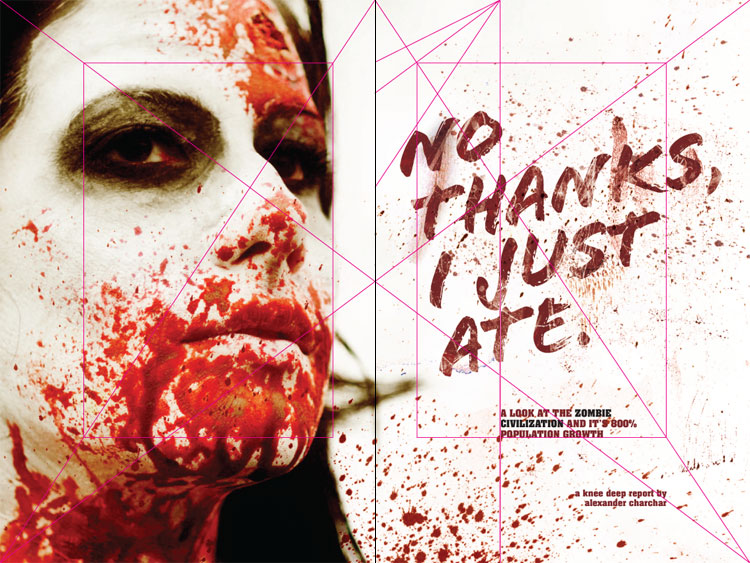


STEP 3 - Alternative page layout: the grid systemThe grid system is an elegant yet simple way of designing your page. It too builds on the fibonacci sequence: 1, 1, 2, 3, 5, 8, 13, etc.
Try dividing your page into columns as seen here, then you can decide how many columns will suit your page. Visit this site for further information.

Wednesday, 30 September 2015

Magazine names - getting creative!

You need to think about your magazine name carefully to ensure you are not duplicating what already exists, that you're hitting the right target audience, and that the name matches the aim of the magazine.


Here's a handy list of some example titles you could use BUT you really want to try and come up with your own. Double check your title with your teacher - we don't want it to be lame!
  • Drone
  • Reverb
  • Deadline
  • MMM (Modern Music Monthly)
  • Resonate
  • The Mix
  • Frontman
  • Riff
  • X
  • Vox
  • Rumpus
  • Turntablist
  • Freak Out!
  • Invisible Jukebox
  • Amok
  • Fred
  • Whoa
  • Haute
  • Light Fantastic
  • Folk You

Magazine fashion and styling

In order for your magazine to successfully appeal to your audience and to meet genre expectations for your style of magazine, you need to research the fashion and styling of the models you will use for your photographs.

You need to therefore produce:
  • Mood boards that cover male and female (where appropriate) fashion
  • Explanation of how your styling reflects the genre of magazine you're creating

Some examples of good work are on Hanna Burrows' blog and Harry Butler's blog.

Wednesday, 2 September 2015

AS Foundation Portfolio Brief


Print

Preliminary exercise: using DTP and an image manipulation program, produce the front page of a new school/college magazine, featuring a photograph of a student in medium close-up plus some appropriately laid-out text and a masthead. 

Additionally candidates must produce a DTP mock-up of the layout of the contents page to demonstrate their grasp of the program.

Main task: the front page, contents and double page spread of a new music magazine.


All images and text used must be original, produced by the candidate, minimum of FOUR images per candidate.

Friday, 13 February 2015

Lessons week beginning 23rd Feb

Your tasks from now until the deadline (Fri 13th March 2015) is to complete the following tasks:
  • Complete the cover / contents / double page spread
  • Catch up and complete any missing work identified by your teachers
  • Post completed work on your blog